Don’t Do Stupid Shit Love Mom and Dad
A Designer’s First Look: Bold, Unapologetic, and Surprisingly Versatile
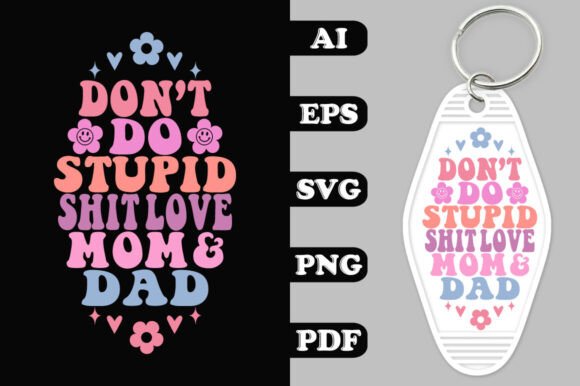
When Don’t Do Stupid Shit Love Mom and Dad landed in my inbox, I paused—not because it’s shocking (though it is), but because its tone lands so cleanly. It’s not sarcastic or snarky; it’s warm, grounded, and quietly confident. The layout feels intentional: compact enough for a small hoop, yet spacious enough to breathe on a tote or sweatshirt. There’s no clutter—no extra flourishes, no decorative borders, no clipart energy. Just clean, readable lettering with subtle weight variation that hints at hand-drawn sincerity. As a designer who regularly selects embroidery files for real production, I immediately pictured it stitched onto a heavyweight organic cotton apron for a small-batch kitchen boutique—or embroidered in soft pastel thread on a baby onesie as a cheeky-but-loving nursery keepsake.
Where This Design Actually Shines in Real Projects
Don’t Do Stupid Shit Love Mom and Dad works best where authenticity matters more than polish. Think custom embroidered sweatshirts for a family reunion, minimalist patches sewn onto denim jackets for teens, or tea towels sold at local craft fairs. Its straightforward phrasing and balanced spacing translate well into satin stitch lettering—no thin serifs to vanish under dense fill, no tiny loops that’ll pucker on stretchy fabric. I tested a mockup on a medium-weight unbrushed cotton tote, and the design held its shape beautifully: legible at 3.5 inches wide, with enough internal clearance between letters to prevent thread nesting. For Etsy sellers, this is gold—it reads instantly in thumbnail previews, supports clean printable mockups, and pairs effortlessly with neutral product photography. It also avoids overused tropes common in Crafts and Graphics categories, giving handmade shops a distinct voice without needing illustration upgrades.
Where Caution Is Necessary—Not Flaws, Just Reality
This isn’t a “stitch-and-forget” file. Its strength—directness—means every detail carries weight. On dark fabric, contrast becomes critical: light thread must be dense enough to read, but not so dense it creates stiffness or shadowing. On textured fabrics like terry cloth or looped fleece, test stitching is non-negotiable—the letterforms need clear definition, not muddied edges. Curved surfaces (caps, curved pillow covers) demand careful digitizing adjustments; if you’re using this as-is from the included SVG or PNG file, assume re-digitizing may be needed for professional results. And while the phrase fits comfortably in a 4x4 hoop, pushing it smaller risks losing clarity—especially the “i” dots and crossbars. Tiny hoops, thin knits, and layered garments (like hoodies with thick lining) all benefit from added stabilizer and conservative stitch density review before running full production.
How It Shapes Perception—Beyond Just Stitching
Customers don’t buy embroidery files—they buy feeling, intention, and trust. Don’t Do Stupid Shit Love Mom and Dad delivers warmth with zero condescension. That builds credibility for small shop owners and craft entrepreneurs who position themselves as relatable, human-first creators. When stitched cleanly on a high-quality sweatshirt, it elevates the finished product beyond novelty—it becomes wearable sentiment. But get the execution wrong (poor thread match, skipped stabilizer, rushed hooping), and the same design can feel cheap or careless. For commercial embroidery, that directly impacts brand consistency and buyer engagement. A well-executed version earns shares, repeat orders, and word-of-mouth; a sloppy one undermines your entire craft business reputation—even if the file itself is technically sound.
Practical Notes Every Embroidery Designer Should Run Through
- Always test first: Run Don’t Do Stupid Shit Love Mom and Dad on scrap fabric matching your final substrate—same weight, same stretch, same dye lot if possible.
- Check thread color contrast: Try black, navy, charcoal, and cream threads against both light and dark backgrounds. Some hues mute the message; others sharpen it.
- Review stitch density: High-density fills work on stable fabrics—but on knits or baby items, opt for lighter fills or add running-stitch outlines for definition.
- Confirm hoop size compatibility: Measure your intended placement area and compare to the design’s dimensions in the PDF or EPS file—don’t guess.
- Inspect small details: Zoom in on the Ai or EPS file—look for anchor points near corners, consistent line weights, and clean joins where letters meet.
- Mock it in grayscale: Convert a digital preview to black and white to assess visual balance—this reveals hidden contrast issues before stitching.
- Use proper stabilizer: Tear-away works for stable wovens; cut-away is safer for knits or anything that will be washed repeatedly.
- Verify licensing: Since this is a digital embroidery file, confirm whether personal use, small-batch commercial use, or resale of finished items is permitted—don’t assume.
Final Thought: A Design That Earns Its Place
Don’t Do Stupid Shit Love Mom and Dad isn’t background decor—it’s a statement piece. It belongs on products people keep, gift, and wear with quiet pride. Used thoughtfully—with attention to fabric, thread, stabilizer, and context—it strengthens your handmade product story instead of distracting from it. Whether you’re an Etsy seller building a niche around witty, heartfelt gifts or a small shop product curator sourcing standout embroidery design assets, this file rewards intention. It doesn’t beg for attention—it earns it, stitch by careful stitch.