Patriotic Paw Mom Pride
When I first opened the Patriotic Paw Mom Pride design file, I immediately saw a graphic that merges two heartfelt identities: the proud dog mom and the spirited American patriot. The combination of a paw print with stars and stripes, layered in red, white, and blue, creates a mood that feels both celebratory and deeply personal. As a designer who reviews embroidery projects day in and day out, I don't just look at a picture—I imagine it under the needle, on fabric, in a customer's hands. This design has a bold, instantly recognizable silhouette, but it also carries enough detail to make me think carefully about how it will translate into thread.
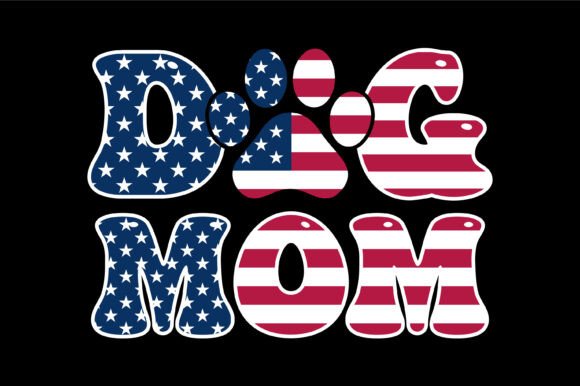
The central visual is a paw print, filled with alternating stripes and a field of stars, as if the paw itself is waving the flag. The words Dog Mom are incorporated, giving the design a clear message without shouting. The shapes are well-defined, the theme is universal for a very specific audience, and the color palette is classic. For an embroidery small business owner, this kind of design ticks a lot of boxes: it's giftable, seasonally relevant, and taps into the enormous pet lover market. But the real question is always whether it will stitch as beautifully as it looks on screen.
First Impressions and the Mood It Creates
The Patriotic Paw Mom Pride graphic feels as if it was made for front-and-center placement on a cozy sweatshirt or a sturdy canvas tote. There's a warmth to it—the paw shape softens the formal geometry of the flag, and the stars sit like a gentle constellation inside the pad. I can already picture a customer wearing this on the Fourth of July, at a dog park, or while walking their rescue pup during a Memorial Day parade. The design carries a sense of quiet pride, not loud bravado, which makes it suitable for everything from a casual tee to a heartfelt gift for a dog mom who has served.
From a pure embroidery perspective, the layout is friendly. The paw is roughly symmetrical, which helps with hooping and placement. The internal divisions—stripes flowing horizontally, a starry canton in the upper left pad area—are distinct enough to be stitched as separate color blocks. This means I can plan a clean satin stitch border around each element and use fill stitch for the flag segments without worrying about muddy transitions. The text, likely “Dog Mom” or “Proud Dog Mom,” appears to be integrated, not floating, which is a huge plus for stitch stability. When lettering is anchored to a larger shape, it tends to resist distortion on knit fabrics.
Where This Design Shines in Real Embroidery Projects
In my own studio, I immediately thought of three products that would give this design the perfect home. The first is a custom embroidered tote bag—a heavy cotton canvas, maybe natural or navy blue, with the paw placed off-center. Because the design is graphic and bold, it would read beautifully from a distance, and the red, white, and blue thread would pop against a solid background. The second is a sweatshirt embroidery for a client who wants a personalized gift for her sister, a dog mom and veteran. I’d stitch it on the upper left chest, sized to about 4 inches wide, using a soft cutaway stabilizer to keep the knit from stretching. The third is a set of embroidered patches—I can see this reproduced as a patch with a merrowed edge, sold at craft fairs or in an Etsy shop. The design’s silhouette is compact enough to work as a patch, and the theme is always in demand.
I also see potential for baby embroidery—a tiny version on a onesie, celebrating a new baby whose mom is a proud dog lover. The patriotic angle might be perfect for a first Independence Day outfit. On a kitchen towel or apron, the design would bring a festive touch to a summer barbecue, especially if the host is known for carrying her dog everywhere. The versatility comes from the emotional hook: it’s not just a flag, and not just a paw. It’s a statement of identity that many people feel strongly about.
For commercial embroidery and small shop products, this design can become a reliable seller. Since it’s provided as a Graphics file in SVG, PDF, JPEG, and PNG formats, you’ll need to convert it into a machine embroidery file yourself or hire a digitizer. That’s a note I can’t skip: the listing does not include a ready-to-stitch file like PES or DST. If you’re an embroiderer who digitizes your own designs, you’ll appreciate the clean vector lines in the SVG, which make tracing and assigning stitch types straightforward. For those who rely on pre-digitized files, this graphic will require that extra step, but the end result is entirely worth it.
Practical Considerations Before You Stitch
Whenever I evaluate a design like Patriotic Paw Mom Pride, I run through a mental checklist of potential trouble spots. The flag’s stripes, for instance, are narrow and repeated. On a small hoop size—say, 4x4 inches—those stripes could become too dense or too thin. I’d recommend keeping the design at least 3.5 inches wide to allow the stripes and stars to remain distinct. If you scale it down excessively, the stars might turn into blobs of thread, and the text could become illegible. Stitch density needs careful adjustment: the fill stitch in the stripes should be angled differently from the stars to create subtle texture, but not so dense that it warps the fabric.
Fabric choice is another major factor. I’d avoid using this design on thin fabric or stretchy fabric without a solid plan. The red, white, and blue areas are large enough that they can pull on a lightweight jersey and cause puckering. A good cutaway stabilizer, properly hooped with the fabric, will be essential. On dark fabric, the white stars and white stripes will need to be dense or double-stitched to prevent the background color from showing through, yet not so dense that the fabric becomes stiff. I always test on a scrap of the exact same material before committing to a customer piece.
If you’re stitching on a cap or a curved surface like a hat, be mindful of the paw’s wide shape. Hooping a cap is tricky enough, and a design that spans too far horizontally can distort on the curve. I’d suggest placing the paw on the front panel of a structured cap, centered, but not too close to the seams. The text, if it sits below the paw, might need to be slightly arched or repositioned during digitizing to follow the cap’s contour. This is the kind of hands-on tweak that separates a professional finished product from a homemade-looking one.
For products that go through frequent washing, such as tea towels or baby clothes, thread choice matters. A high-quality polyester thread will hold its color and resist fading better than rayon, especially with the bright red and white. I’d also recommend a soft backing behind the design on baby items to avoid any scratchiness against delicate skin. The Patriotic Paw Mom Pride design, with its full coverage of the paw area, will feel like a patch on the inside of a garment if not backed with a thin, soft stabilizer or cover stitch. For a boutique product, that extra touch builds customer trust and repeat business.
The Visual Impact on Handmade and Commercial Products
From a branding perspective, this design brings a lot of value to a craft business. It’s recognizable, it’s emotional, and it fits a niche that feels underserved: the patriotic pet mom. When I think about my own Etsy seller listings, I can see this design photographed on a natural linen pillow cover, styled with a vintage flag and a dog collar. The product photos would tell a story instantly, and stories sell. The handmade product presentation would benefit from the design’s clean symmetry—it looks professional even when stitched by a home-based machine, as long as the digitizing is solid.
Using the PNG Transparen file included in the download, I can create printable mockups for product listings before I ever stitch a single piece. That’s a huge time-saver. I can drop the design onto a digital tote bag or sweatshirt mockup, show color variations, and even offer customizations like adding a dog’s name. The fact that the design comes in multiple formats means it’s a true design asset for a craft business, useful for both embroidery and other crafts like sublimation or HTV. But for my embroidery work specifically, I treat the SVG as the starting point for digitizing.
What a Designer Needs to Verify Before Using It Commercially
Since the listing doesn’t specify a stitch count or provide a pre-digitized embroidery file, the burden is on me to ensure the conversion is flawless. I always test the design at the intended size on a piece of scrap cotton, using the same stabilizer and thread I’ll use for the final product. I check the stitch density on the stars—if they’re too small, I might simplify them to a few satin stitches rather than a fill. I also check the thread color contrast: a true navy blue against a bright white can be stunning, but if the blue is too dark and the white is too thin, the stripes can look muddy. I often run a quick black-and-white mockup of the design to see if the values hold up; if the contrast disappears in grayscale, it will likely need tweaking in thread colors.
Another critical check is the hoop size requirement. I’ll digitize this design to fit comfortably in a 5x7 hoop, but I’ll also create a smaller version for 4x4 hoops, stripping out some internal detail if necessary. The lettering is always the first thing to become unreadable at small sizes, so I’ll set a minimum height for the text of about 0.25 inches. If the original text in the graphic is too small for that, I’ll enlarge it slightly during digitizing, as long as it doesn’t break the design’s proportions.
Finally, licensing is a point I never skip. This design is sold as a craft graphic, but I need to confirm whether I can sell finished embroidered items made from it. Most designers allow commercial use on physical products, but I always read the seller’s terms. If I plan to sell the design as a digital embroidery file that others can stitch, that’s a different license entirely. For my own shop, I’ll use this design to create finished products—totes, shirts, patches—and I’ll feel confident doing so as long as the license permits it. The peace of mind that comes with clear licensing is part of what makes a design a solid business asset.
Real-Life Scenario: A Custom Tote for a Client
Let me walk you through a real project I’m planning with this design. A client reached out, wanting a gift for her mother who is a retired vet tech and a lifelong dog rescuer. She wanted something patriotic for the Fourth of July that also honored her mom’s love for dogs. I immediately thought of Patriotic Paw Mom Pride. I’ll stitch it on a heavy-duty 12-ounce canvas tote in natural cream, with a lining in a red ticking stripe fabric. The design will be centered, about 5 inches wide, stitched in polyester thread for durability. I’ll add a thin satin stitch border around the whole paw to give it a patch-like finish, and I’ll use a layer of tear-away stabilizer topped with a water-soluble topping to keep the stitches crisp on the textured canvas.
Before I stitch the final bag, I’ll run a test on a canvas scrap. I’ll check that the white stripes don’t get lost in the cream background—if needed, I’ll add a subtle light blue outline to the white areas. I’ll also confirm that the stars are clearly defined and not too dense. Once I’m satisfied, I’ll stitch the tote, photograph it in natural light with a few vintage props, and deliver it. The client will see a product that feels intentional, high-quality, and completely unique. That’s the power of a design that’s been thoughtfully evaluated before it ever touches a customer’s hands.
Final Thoughts from the Embroidery Studio
The Patriotic Paw Mom Pride graphic is a strong addition to any crafter’s library, especially if you serve the dog lover and patriotic markets. It’s emotionally resonant, visually clear, and adaptable across a range of products. As an embroidery designer, I appreciate the clean file options that let me digitize without guesswork, and I value the creative possibilities it opens up. The cautious notes I’ve mentioned—testing on scrap fabric, adjusting for hoop size, minding thin fabrics, and verifying licensing—are not criticisms; they’re the standard professional practice that turns a good design into a great finished product. If you treat this design with the same practical care, it will reward you with stitches that look as meaningful as the message they carry.